by Rebecca Romani
April 2, 2025
April marks the 15th year of the San Diego Arab Film Festival which screens at the beginning of April at the Museum of Photographic Arts. One of the youngest festivals in San Diego’s film festival family, it returns with a very diverse and strong line up.
Festival chairman, Larry Christian told Vangaurd Culture, “When we selected films, we wanted to emphasize countries that are under attack: Palestine, Lebanon, and Yemen. We also wanted to include films that are not about war, that show the breadth and humanity of Arab people and culture as well as the ways in which Arab creatives address issues and challenges in Arab society.”
Christian recommended several films, including Gaza (A State Of Siege) and a film, Message, by Iranian filmmaker, Saeed Moltaje, about Gaza.
There are also some unusual films “such as the Tunisian film Take My Breath, which I think is the first Arab feature film that deals with an intersex person as she tries to find her way through a traditionally conservative society.”
The film festival is a project of the local non-profit Karama, which was formed to create greater awareness and knowledge of the Middle East and North Africa, with an emphasis on Palestine.
This year’s festival is dedicated to the memory of Stephanie Jennings, a dedicated founding member of the festival.
Many of the films are recent releases and some were submitted for consideration for Best Foreign Film for the 2025 Oscars. In addition, several filmmakers are back with new films, and it is a pleasure to see how their new work unfolds.
Day 1:
The first day, Friday, April 4, is quickly selling out. On-line sales are closed, and tickets will be sold at the door until seats are filled.
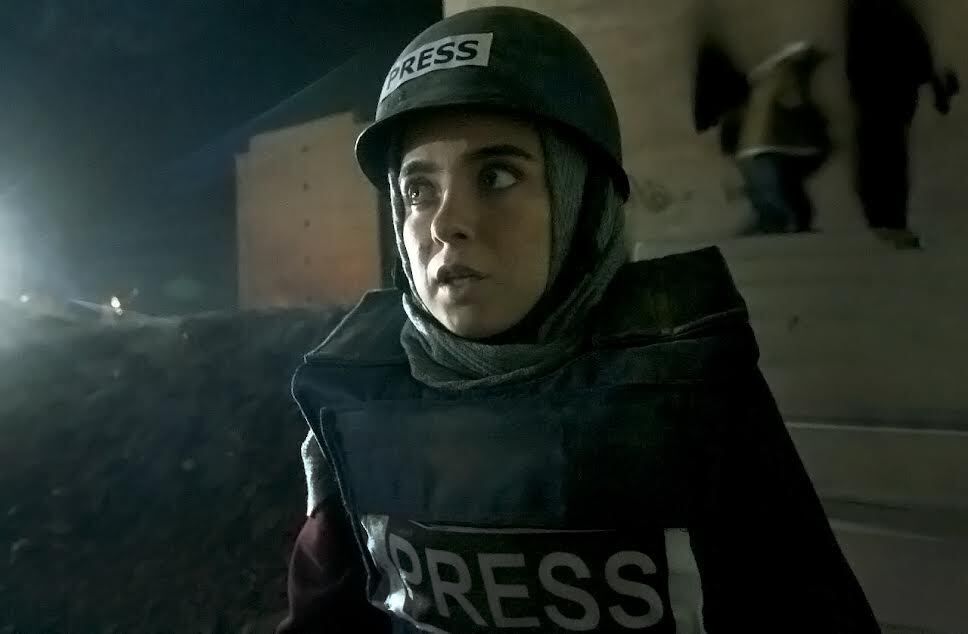
Day 1 starts off with the usual short paired with a feature. The short, The Message, directed by talented Iranian artist and director, Saeed Moltaji, follows a female reporter reporting from Gaza. Because of tech issues, she needs to find a way to file her story, not an easy thing to do in the best of circumstances.
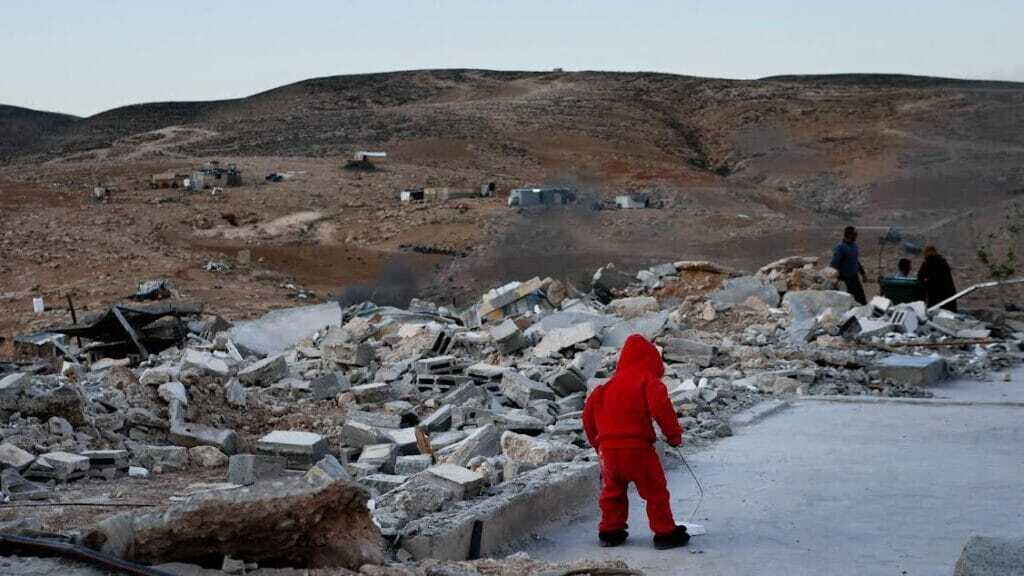
The Message is paired with the stunning and somewhat shocking documentary that has been making the rounds, No Other Land, which won best documentary feature this year. The documentary is the directing debut of an Israeli and Palestinian collective, Basel Adra, Hamdan Ballal, and Yuval Abraham who shot the film between 2019 and 2023.
The film depicts the Israeli army destruction of Masafer Yatta, a Palestinian section in the West Bank and the childhood home of one of the directors, Adra. The film has been well-received in Europe where it won several awards. It also won numerous awards in the US. Hamdan Ballal, one of the directors, was attacked by Israeli settlers at his home in the West Bank in March of this year and subsequently taken into custody by the IDF. No settlers were detained, and Ballal has since been released.
This screening is now sold out.
Day 2:
First Screening:
Gaza, Lebanon, and Yemen take the screen. The first screening block starts at 6:10 pm with a feature and several shorts.
Palestine Islands (Gaza), directed by talented French Jordanian director, Nour Ben Salem, imagines a world where a young girl, Maha, from the Balata refugee camp near Nablus, in the West Bank, seeks to comfort her ailing grandfather by enlisting her friends to help her create a scenario in which the Separation Wall has fallen, and they can finally be free to visit his beloved sea together.
This short is Ben Salem’s directorial debut.
Fariha (Yemen), an extraordinary documentary by first time Yemeni filmmaker, Bader Yousef, an accomplished young photographer. Yousef’s photography documenting Yemeni street life has won him numerous awards.
A chance encounter with a Yemeni singer, Fariha, famous in the 1980’s, is a subtle and moving portrait of an older woman, who, despite the war and Yemen’s conservative values, maintains her integrity as an artist.
Interestingly enough, this film, like many in the festival, was funded in part by the Doha Film Institute and produced by another British Yemeni director, Sara Ishaq, whose documentary, Karama Has No Walls (2012) screened at the 2013 San Diego Arab Film Festival.
Ishaq’s 2012 film was nominated for an Oscar for its brave and sensitive coverage of the Yemini reaction to the 2011 Yemeni Revolution.
Myriem Geagea returns to the San Diego Arab Film Festival with her feature length directorial debut, the documentary, Tilka. Geagea’s work was recently screened at the Festival as the editor for Lebanese director Nadine Labeki’s Capernaum (2018).
Participatory Theatre is not a new concept nor is its use as a catalyst for traumatized groups (See Queens of Syria by Yasmine Fedda, which also screened at the San Diego Arab Film Festival); however, Tilka (Lebanon) feels fresh and dynamic, set as it is against the complex backdrop of Lebanese politics, the lives of refugees, and the hopes of artists. Five women of various backgrounds meet at an artist’s residency to create a new piece of theatre. What you see will greatly move you.
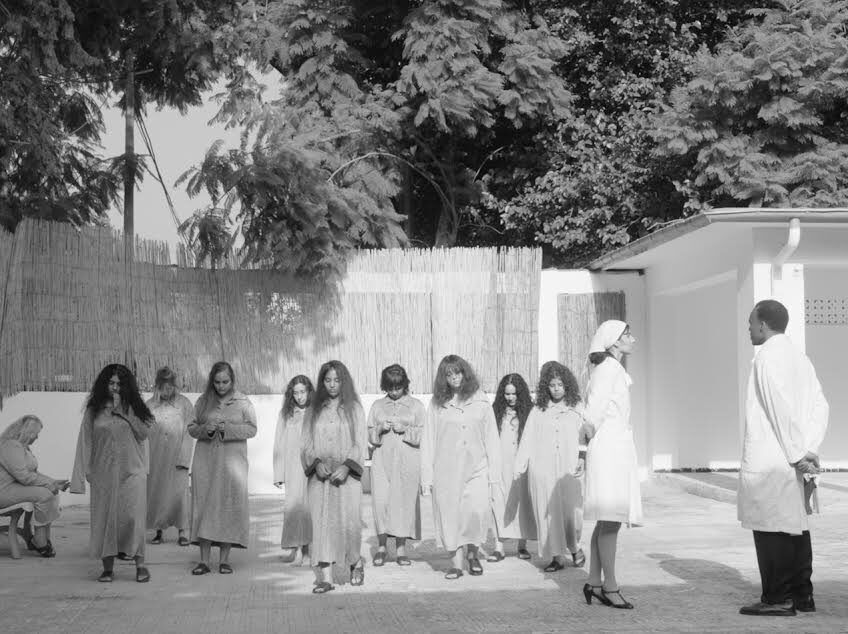
The second screening block starts at 8:30 p.m. with an achingly beautiful experimental documentary from Palestine, The Poem We Sang, directed by Annie Sakkab, a director and photojournalist currently based in Jordan. Poem is Sakkab’s second short documentary. Shot in three countries (Canada, Palestine, and Jordan), the film is a gorgeous black and white meditation on loss, longing for a homeland, and the language(s) of home. Sakkab has built this piece around family audio archives and photos, interweaving personal history with that of Palestine, creating a warm and deeply sensitive portrait of a family, memories of a lost home, and the words that sustain them.
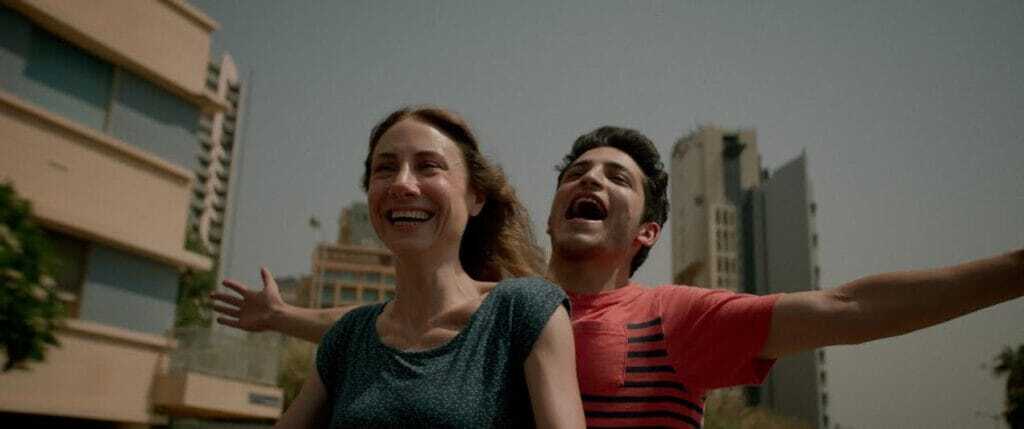
The second block ends with Arzé, a light feature about resilience and finding one’s footing in Beirut. Arzé, the debut of a relatively young Lebanese director, Mira Shaib (31) is a nicely paced piece which is as much a love letter to Beirut in all its complexities as to its main character, Arzé, a single mother trying to raise her son in Beirut.
Coming up:
The festival continues April 11-12 with screenings of shorts from Palestine, a documentary on Franz Fanon from Algeria, and an unusual look at Tunis, Tunisia. Also returning is work Palestinian directors, Carol Mansour and Mouna Khalidi, whose beautiful documentaries on Palestinian embroidery and Mansour’s mother have screened at the festival in previous years. A State of Passion could not be more timely. The documentary follows British Palestinian doctor, Ghassan Abu Sitta, who has operated around the clock in several of Gaza’s now destroyed hospitals.
How to festival:
The festival screens at the MOPA in Balboa Park with plenty of parking behind the MOPA or across the street. You can buy tickets online or at the door but you are strongly advised to get tickets early since the screenings often sell out. There are two screening blocks and in between, you can relax and meet other festival goers over a buffet style dinner of traditional Arab food, tea, and baklava.
For more information on tickets, times, and screening availability: