By Kristen Nevarez Schweizer
December 10, 2025
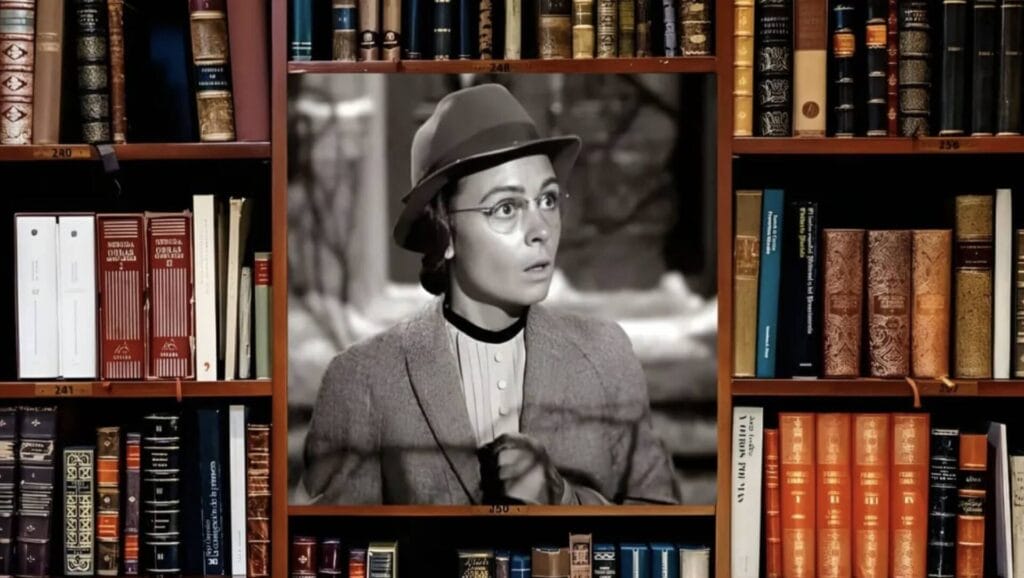
In my home, It’s a Wonderful Life is not a movie but a memory. I watch it religiously every Christmas season. And like Scripture, I return to it knowing exactly what will happen and still hoping it might surprise me. Which is why Dori Salois’ holiday play She’s at the Library feels less like a ‘reimagining’ and more like a long-overdue midrash.
This December, Saolois’s feminist twist of the Capra film returns in a special 2025 staged-reading collaboration between La Jolla Theatre Ensemble, Point Loma Playhouse, and Vantage Theatre. For those who missed its triumphant 2021 world premiere (or were shut out by the sold-out ticket rush), this is your second angel’s-wing opportunity. (Note: there are a few light spoilers ahead, but consider them appetizers as they’ll only make you hungrier to see the entire story.)
The script’s premise is deliciously simple: What if Clarence was right about what happened if George wasn’t born, but wrong about what that meant?
When George Bailey crashes in from the familiar Capra timeline to Clarence’s dystopian dream, George is screaming, frantic and aching, looking for the Mary of his memory. He wants his dutiful wife, the quietly exhausted saint of Sycamore Street. Instead, he’ll find a powerful woman who stands on her own two feet.
In Salois’ imagined “Georgeless” timeline, Mary Hatch is not a lonely, defeated cautionary tale. She is at the library because she graduated from college, became a lawyer, and now leads as a community organizer. Rather than being diminished by spinsterdom or public service, Mary is electrified by it. She is, quite literally, at the center of town power.
Mary’s life is fiercer without George. She fights Potter through eminent domain law instead of passive endurance. She founds homes for battered women and disabled veterans instead of quietly absorbing crisis into the Baileys’ drafty kitchen. Mary-without-George is still the relentless defender of Bedford Falls—and possibly more effective.
A confident, self-reliant Mary doesn’t soothe confused-George’s panic attacks with smiles; she interrogates him. She demands to know what Bedford Falls is like in his timeline. When George recounts his version of their married life (rain leaking through the Granville house roof, four children, endless emotional labor), Mary listens with mounting disbelief. Finally, she deadpans: “Gee, it sounds like a wonderful life.”
Thankfully, Salois is too generous a storyteller to flatten George into a villain. What emerges is not an either/or argument between domestic devotion and public leadership, but a braver question: What does partnership mean when both people are fully alive?
That question has shaped other works from Salois. Before she sent Mary Hatch to law school, she gave Elizabeth Bennet’s mother a feminist detour in her novel Mrs. Bennet’s Sentiments: Pride and Prejudice and Perseverance. In this sharp, compassionate reframing, Austen’s most maligned matron is not comic relief but a woman who survives economic terror through strategic matchmaking. Rather than toppling classics, Salois turns the camera slightly to the left to let the women already in the frame finally speak. So it makes sense that she is the executive director of a theatre company called Vantage.
Salois’s love for It’s a Wonderful Life is sincere, not cynical. In fact, she says the play was born from a mere irritation: the way Clarence says, “You’re not going to like it, George. She’s an old maid. She never married. She’s just about to close up the library!” as if that were the darkest possible destiny for a woman. This play reminds us that unmarried librarians, lawyers, organizers, and women are not evidence of despair, but of possibility.
The 2025 staged readings will lean fully into festive rebellion: teeth and cookies. (Yes, there are actual Christmas cookies promised.) Two readings will be fittingly occurring at the La Jolla Library, and another at the adorable Point Loma Playhouse.
For longtime lovers of It’s a Wonderful Life, the experience is cathartic and a chance for fantastic post-show conversation. The final, smart moment is a reminder that choice itself is holy: “It’s a wonderful life… whatever you choose.”
Which inevitably brings us back to Mary Hatch-Bailey, the original cinematic quiet hero.
In Capra’s film, while George despairs into the snow and requires an angel for direction, Mary makes phone calls. When George returns, renewed by God’s vision, he comes home to find neighbors handing him crowd-funded cash to save the town. Then, Uncle Billy Baily stutters out in explanation the truest, forgotten line in the movie: “Is it wonderful, Mary did it!”
Salois heard that line echo across seventy-five years and took it at face value.
2025 Staged Reading Dates
Dec 16 (6 PM) & Dec 20 (2 PM) @ La Jolla Library — Free; reserve via vantagetheatre@gmail.com.
Dec 21 (3 PM) @ Point Loma Playhouse — Reserve your free tickets HERE.