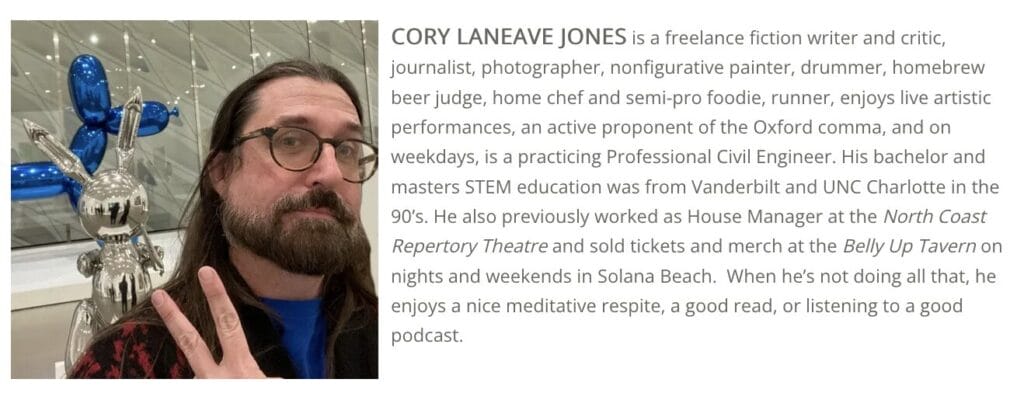

By Cory-LaNeave Jones
February 18, 2025
Michael Jackson wrote a song back in 1991 called “Black or White” that rippled through the media in the good old tabloid days of The National Enquirer and when “morphing” appearances was still just a new feature available from a borrowed copy of your friend’s Photoshop. Enquiring minds wanted to know: “What color is he now?” Or, “Is that just makeup?” about the “King of Pop” after his curious case of Vitiligo, the auto-immune condition of “depigmentation” where pigment-producing cells (melanocytes) die or stop producing melanin. When other artists were experiencing bits of fame here and there, Michael never knew a time when the media did not follow him around in scrutiny.
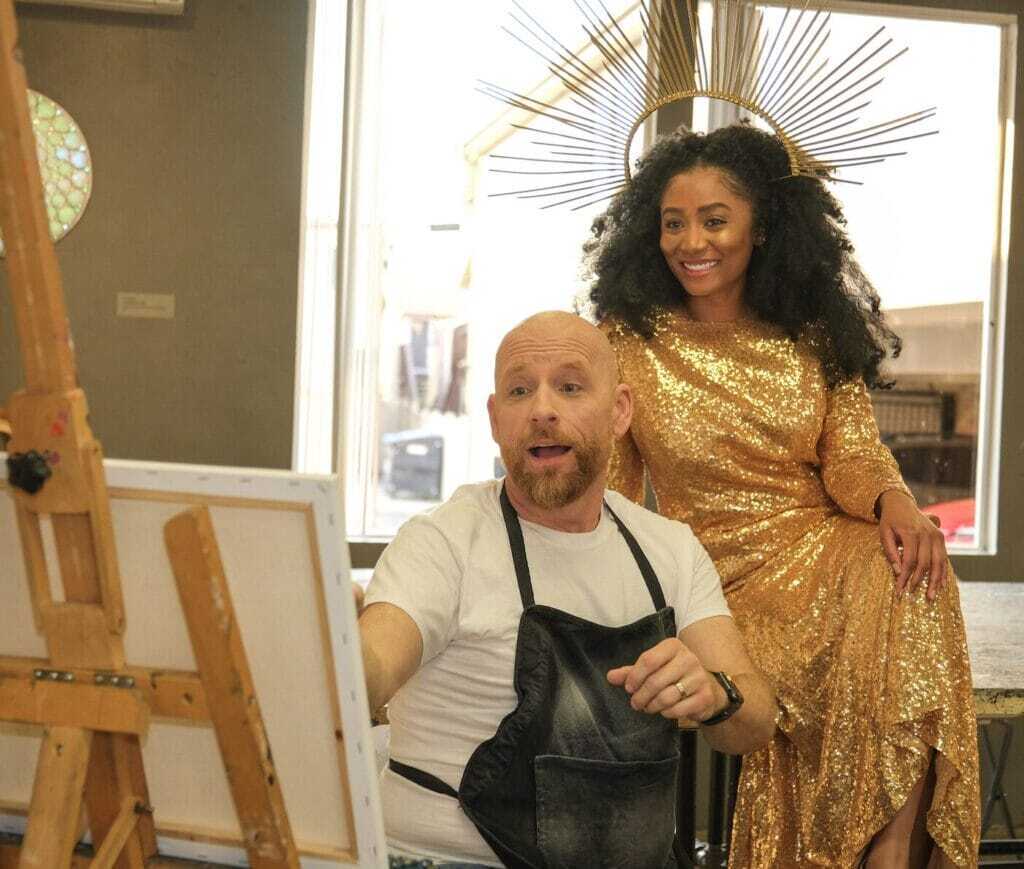
In a satirical black comedy on the current situation of “reverse racism” in America, Pulitzer Prize winning playwright James Ijames (that’s pronounced “I’ms.” The “J” is silent) has constructed the story of a hard-working struggling artist, who happens to be “White” in race, but finds himself ostracized from the norms of white cis-gendered heteronormative culture because he is a gay man and is dating an Asian man. From his perspective, he is struggling for recognition in an era where the “culture-wars” had shifted to presenting works by marginalized artists to the fore-front, especially following the social reckoning which took place in response to the deaths of George Floyd, Stephon Clark, Philando Castile, Freddie Gray, Tamir Rice, Michael Brown, Eric Garner, and #SayHerName Breonna Taylor, and all the many other stories of police violence against black and brown peoples identified by the Black Lives Matter movement. The story follows the travails of Gus, the stereotypical emotionally wounded starving artist who just wants to get his break in the art world.
Gus, however, has to move through a series of unfortunate stumbling blocks to gain entrance to the peculiar world of contemporary art museums. In his scheme, he decides to create a personification of what his friend, Jane, the curator at the world-renowned Parnell Contemporary Museum has described as her approach to selecting “new” artists who are merely underrepresented racial categories on most contemporary art world walls. In developing this character, Gus intends to create a new performance piece of art and even cites his dream that this may become as well-known as Marina Abramović’s work.
Now, it is clearly one thing to dream of doing something as bold as sitting with strangers and staring at them intently, one by one, such as Abramović’ did at the MoMA in New York in 2009 in The Artist Is Present. It is also, something very different for a white man to “construct” the portrait of a “blAfrican American” female, a term that the actor pretending to be an artist developed in the play.

This play has so many twists and turns that it tests your spirit and helps you to reconsider your “wokeness” in a post-George Floyd world that is slowly attempting to rid itself of Diversity, Equity and Inclusion under the new presidential administration. WHITE eagerly takes you trough the gambit of tropes that white America believes to be true about it’s shadow self.
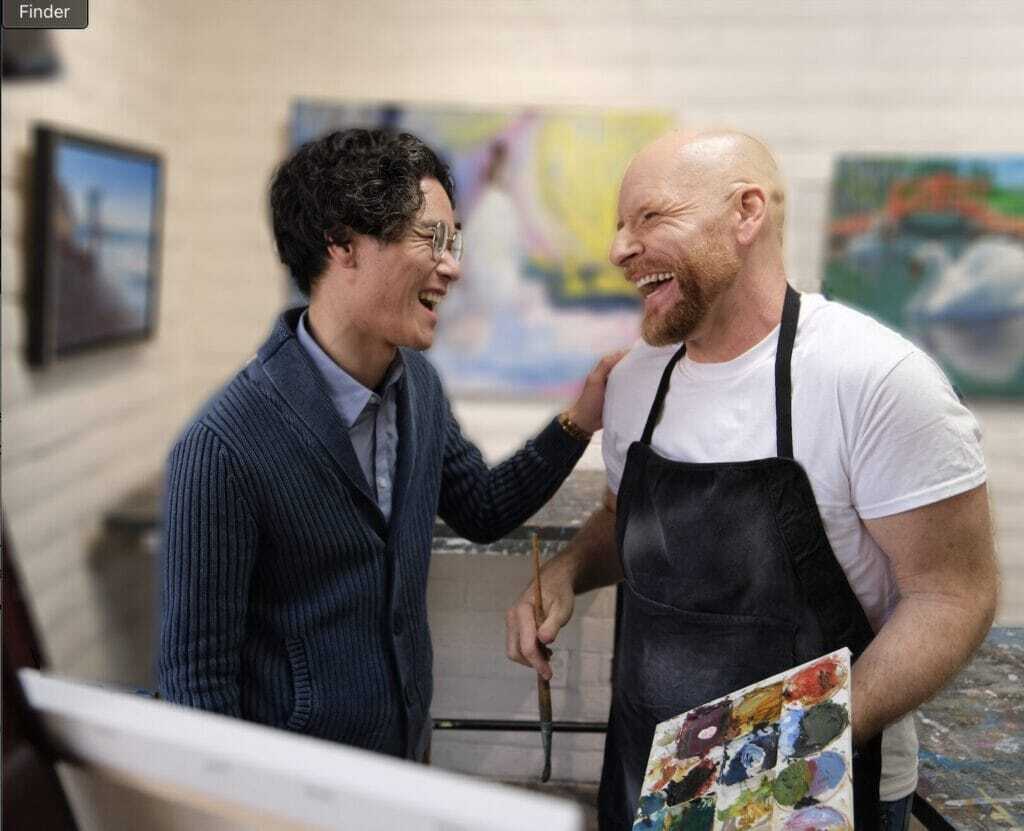
In a later discussion between the artist, Gus, and the actress, Vanessa, who is considering creating performance art by playing a stereotypical black female, gets into it as Vanessa recalls reading an article in The Atlantic discussing something known as “Racial Tourism.” Vanessa goes on to say, “No it’s like…’Let me play double-dutch with the black girls on the playground ‘cause they make me feel all empowered and fierce. They can teach me fun comebacks and how to wag my finger and I can be just as fierce and fabulous as them but, without the burden of actually being a black girl.’ I got that right?” Gus retorts “I’m not a racist.” To which Vanessa replies “Did I say you were a racist?” “Did the words, Gus, You, Are, or Racist come out of my mouth.” … This little argument begets both disagreements and confirmation of situational biases amongst the two collaborators as they eventually agree that it is mutually beneficial to continue with “the act” of conforming to a stereotype to gain access to media coverage and entrance into a well known museum.
American Abstract Minimalist artist Agnes Martin would likely have had a fit if she saw the paintings that Gus, a gay white man created so peculiarly similar to her method of lightly coating a large canvas with slightly hued colors over the color of the canvas background. Yet Gus describes the approach fairly eloquently:
“It has volume and mass…but not just that… It’s open. It’s presenting itself to you as a mirror almost. You apply to the canvas, to the white paint, what you are. Who you are. You are the missing part of the art-making process. … Look closer. Extend yourself into the world of the painting. Into the whiteness.”
Ijames also included three quotes at the front notes of this play for the audience to consider:
“…don’t be afraid of your shadows having white in them…”
– James Abbott McNeill Whistler
“Genius is personal, decide by fate, but it expresses itself by means of system. There is no work of art without system.”
-Le Corbusier
Le Corbusier is a famed modernist architect who has his share of debate due to alleged ties with fascism, antisemitism, eugenics, and connection with fascist Italian dictator Benito Mussolini.
“You think you slick, but you ain’t slick enough to slide.”
-African American Proverb
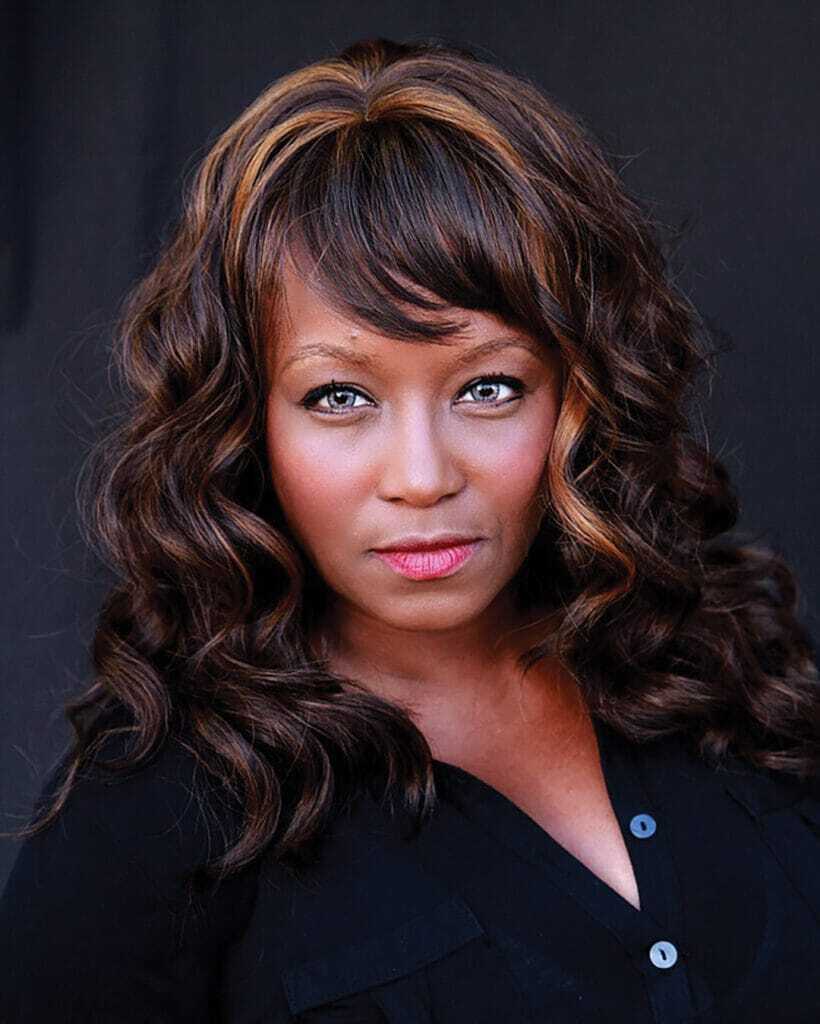
I had the opportunity to speak with the director of the Scripps Ranch Theater production of WHITE, Yolanda Franklin, and here are the highlights of our chat:
CJ: How did you decide on this play and choosing to do this play? Was there a particular reason that it resonated with you with our times now? Was it the exploration, race, privilege, artistic gatekeeping?
YF: Well, this is the kind of work actually that I do at the theater company where I’m executive artistic director, for Common Ground Theater. … I was headed into, they asked me to do a direct collaboration with my theater company, Common Ground on Stew (a play by Zora Howard). We did Stew together, and I directed Stew, and then she loved my work with Stew. So she said, you know what? In our season, we’re going to have this new play, this play that we’ve selected from her writing. She has a team of people who read plays for the season, and they selected this (White). It just happened to be some play from 2017. He wrote it in such a way that it could be anywhere and relevant now during this time period. So the actors actually create the location. So there’s a minimal set, and this is the kind of work I do. A Common Ground Theater is a black theater company that’s one of three longest running black theater companies in the United States of America.
CJ: So do you prefer black or African-American or BlAfrican-American? I just want to get that right.
YF: You read that.
CJ: That tripped me out.
YF: Okay. So in the play, he creates that. He creates that. That’s his made up. It’s almost like black. I have some friends in the Latino community that call me that because I love the culture, but I would say black or African-American.
I’m good either way, but I love the work. I love the work that has you do an examination of yourself, and that has you sitting in the theater with questions and long after the show is over.

CJ: Yeah. I feel like I could identify with having friends with the different aspects that were explored. I know friends that do have that experience of being white and feeling like they’re no longer seen, and they really believe that. And then I have friends that are every other race and from every other country, and they’re like, okay, well, this is what I had to do to get where I am. And it’s like a non-recognition of the difficulties.
YF: Like that part. I understand. Yes, yes, yes. Throughout the play, you’ll see there are different stereotypes from all the different nationalities. Right. It’s a satire and it’s done. And you’ll see it done in, it’s a dark comedy, and it’s done an episodic show on television.
It’s done like a sitcom, and it moves.
CJ: And it references a sitcom.
YF: Yes, yes, yes, yes, yes, yes. The Cosby Show. The Cosby Show. Right.
CJ: And he didn’t remember Mr. Huxtable’s name. I was like, that was hilarious. I watched myself plenty of Cosbys when I was a kid.
YF: So, there is artwork in the production, Gus. He’s an artist, a painter, and he produces first this spiral all-white piece with no other color, and he produces five more pieces.
CJ: Did you work with other local artists to produce these versions?
YF: What we’ve chosen not to have any artwork in the frame for the show, and that you are to create, you, the audience member gets to create the art that’s in the frames. So, there will be a lot of frames throughout the show hanging everywhere. And the only arch we’ll see will be the one piece, the one white piece that has a spiral, and then the rays pointing into it. And then there is another piece at the end that it’s evolved to, that the artwork has evolved to. But the only actual art that you’ll see in the show will be what the curator refers to by the white men of the Parnell Museum.
So that was an artistic choice between the collaboration of myself and the set designer, the set designer.
CJ: Balcony, or Balkonae. (these are two versions, the mis-pronounced, and pronounced, character names in the play) It’s a great question. Where is my personality? Is this really my real personality? And sometimes we all feel that sometimes other people feel that more than others. Do you feel like that has something to say about our society in today’s culture?
YF: Well, I’m going to tell you this. People should come because, and remember, it’s a satire. And what a satire does is it takes, and it goes really far with the comedic aspect of whatever it’s doing, and it flushes (it) out. And there’s things that are done that are so absurd, or there’s so stereotypical that you have permission to laugh at it. But in your laughing at it, it has a message that creeps up on you. And that’s what the actors found in the designer’s run. And we had a talk about it, and this is what I’m going to say about all that. This is my answer to that. You are going to come and you’re going to see, you’re going to feel like what you’re seeing on stage had a veil over it, the different personalities and the different cultures, and the different stereotypes that you’ll see. And it’s like you are taking the veil and you’re unzipping it, and you are being privy to conversations that you don’t usually get to be in attendance to. So I’ll just say that because some of the actors said, well, gosh, some of this feels real, and it feels like this is something I would say in private, or this is something that I would say only with my group of family members or so.
It’s a dark, it is a dark comedy, and it may touch, inspire, make you angry, make you sad, make you question, there’s a lot of provocative questions that may be on the forefront of you when you are ready to leave. But that’s what I’ll say about that. That’s just what I’ll say. And it’ll be left up to you to see where it lands inside you, but you will, there will be something that you will get out of it.

CJ: What themes sparked perhaps any difficult or enlightening conversations during the rehearsals?
YF: All of them, mainly race, privilege, sexual orientation, and not wanting to have that on the chopping block, taking on this character, but knowing that they are the characters and they’re not you. You’re a hired actor. And although there may be some similarities, I think there may be times where the actors in talking, they might be, sometimes you’re acting so well that you become the hated man in the room because you’ve done your job.
And during our designer’s run, there’s a part where he’s, Gus is saying, oh, no, he’s pretending that he’s a sassy black woman. And he, oh, no you didn’t. And doing the finger roll, and he’s doing the neck roll. And so one of our designers, who is a white male as well, he said, Yolanda, although I know he was trying to make a mockery, and I know it was supposed to be funny, he said, I cringed when he did it.
CJ: Everything he’s seen on tv.
YF: Exactly. And believes to be part of him. And maybe it is part of him, maybe it is, but I mean, there’s truth to that.
CJ: You’re informed by your environment.
YF: Exactly.
CJ: Do you believe that art world has made meaningful progress in the issues of white critiques? Or are we stuck in a cycle of performative inclusion?
YF: Oh gosh. Cory. What I’ll say is maybe that I feel there continues to be people that are underrepresented who may not have affluent parents that can send them off to Italy or send them off to get cultured. We don’t know how to answer that. That’s a hard one.
CJ: So did directing this play white, did that challenge any of your own views on race privilege or the art world?
YF: What it did? It was challenging. It’s challenging to go through and do this kind of work and to have someone collapsing in your arms because they’re crying because of what it’s done to them and brought up inside of them. So that’s the challenging part for me. It’s the execution of it. It’s the opening up my actor to understand what they’ve taken on. Because sometimes people don’t know what they’re stepping their foot into. And because I do this work a lot, it does wear on the body. But what I see is the joy of bringing it to light is to opening up the veil. So no, I don’t look at it in that way. The challenge is, which is a good thing, the challenge is having the actor understand the importance of the work that they’re doing, and not try and change the vision of the playwright to their own, because they wanted to show something else, or they want to have the character go on a different journey besides the journey that he’s on, because it’s so important that we’re able to see what happens in this particular situation. So that’s the challenge. That would be the challenge.
CJ: Last question, so if the playwright were watching your production, what would you hope he would say about it?
YF: They got it right. They got it right. They understood the assignment.
..

“White,” written by James Ijames, directed by Yolanda Franklin, is being performed at Scripps Ranch Theatre, located at 9783 Avenue of Nations, San Diego, CA 92131 from February 14 to March 9, 2025. Please check out this production on an evening that suits your schedule. It is sure to transmogrify your understanding of yourself in relation the this ever-complex-and-dynamic world and should help you better understand your neighbors.
“And I told about equality
An it’s true
Either you’re wrong
Or you’re right.But, if
You’re thinkin’
About my baby
It don’t matter if you’re
Black or white.”
-Michael Jackson, 1991 Mijac Music (adm. By Warner-Tamerlane Publishing Corp.)(BMI) Ignorant Music (ASCAP)