
by John M. Eger
December 4, 2025
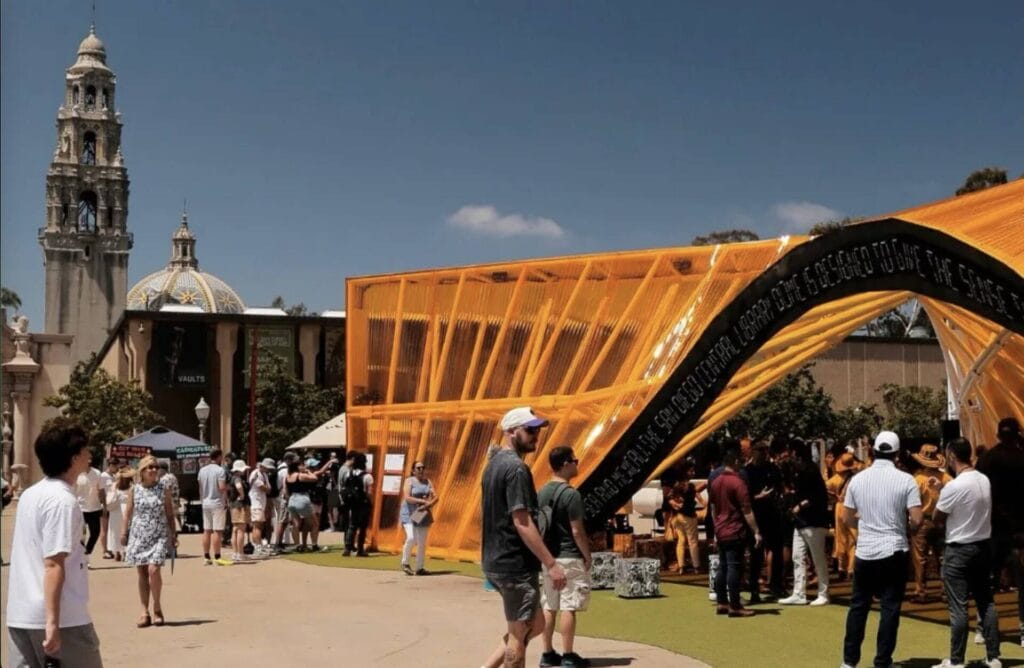
If mayors ruled the world today, cities could lead us toward tomorrow’s future — a future where governance is pragmatic, economies are creative and innovative, and culture is the connective tissue that makes urban life not only livable, but meaningful.
In his book If Mayors Ruled the World, the late political theorist Benjamin Barber argued that cities — and the mayors who govern them — offer a more pragmatic, collaborative, and effective form of governance than nation-states. National governments, he noted, are too often paralyzed by ideology, nationalism, or geopolitical brinkmanship.
By contrast, mayors focus on tangible, everyday issues: “collecting garbage and collecting art rather than collecting votes or collecting foreign allies,” and on “the supply of water rather than the supply of arms.”
This deceptively simple observation underscores a profound truth: cities are where life happens and where culture is made. Unlike abstract national policies, urban governance is grounded in immediacy — public safety, transport, housing, education, and increasingly, art and cultural vitality.
Barber emphasized that cities are inherently relational and collaborative, forming “networked” ties that transcend borders. In practice, this has given rise to global city initiatives, from climate compacts to cultural exchanges, where cities commit to action even when national governments falter.
The role of culture is not ornamental — it is foundational to urban prosperity. Cities are cultural ecosystems where heritage, creativity, and innovation converge. Richard Florida’s “creative class” thesis and UNESCO’s Creative Cities Network both demonstrate how arts, design, and cultural production fuel economic growth, social cohesion, and civic identity.
And one doesn’t have to invent the future. It’s happening in now in these cities:
Barcelona, Spain – Once an industrial city, Barcelona reinvented itself by investing in architecture, design, and cultural institutions, from Gaudí’s landmarks to the 1992 Olympics’ cultural programming. It’s “22@ Innovation District” integrates universities, start-ups, and cultural hubs, making culture central to its economic transformation.
Berlin, Germany — Emerging from Cold War division, Berlin became Europe’s creative capital by supporting artists with affordable work spaces, cultural subsidies, and a thriving nightlife and music scene. Today, Berlin attracts global talent in design, gaming and the arts, proving that cultural freedom can be an economic engine.
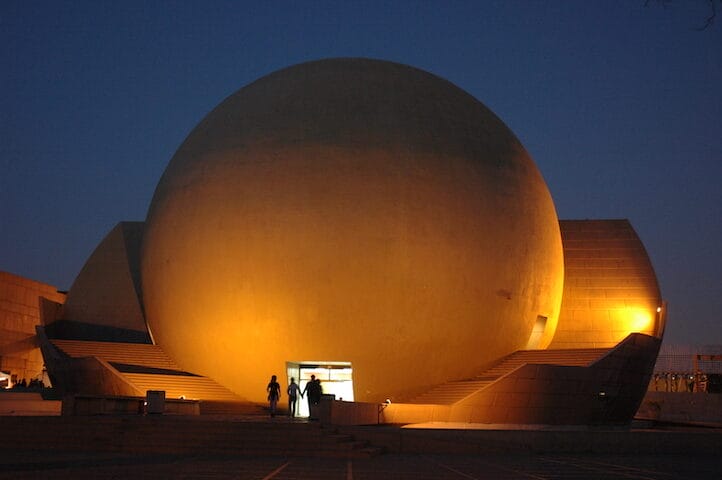
San Diego–Tijuana — This bi-national metro exemplifies cultural interdependence. San Diego’s innovation economy and Tijuana’s thriving arts and design scene feed each other, with cross-border film, culinary and visual arts collaborations. In 2024, San Diego and Tijuana were recognized as the World Design Capital.
Medellín, Colombia — Once infamous for violence, it transformed itself through “social urbanism” by building cable cars, libraries, and cultural centers in its poorest neighborhoods. Public art projects like Botero Plaza not only beautified the city but also gave residents a sense of ownership and pride.
Austin, Texas — Known as the “Live Music Capital of the World,” Austin leveraged its music and arts culture to attract tech talent and major events like South by Southwest. The festival generates over $300 million annually and acts as a platform for global innovation in music, film, and technology.
Like broadband, which boosts GDP and innovation, cultural density enhances connectivity, linking people, ideas, and communities. Broadband enables the flow of data; culture enables the flow of meaning. Together, they form the infrastructure of modern urban life.
Culture-led development carries risks. Left unchecked, it can accelerate gentrification and displace the very communities that make cities vibrant. Yet, when designed inclusively, cultural policy strengthens equity.
Take New Orleans, Louisiana, for example. Despite gentrification pressures, New Orleans sustains cultural equity by supporting community-based traditions like second-line parades, brass bands, and Mardi Gras Indian tribes. These forms of grassroots cultural expression sustain identity and economic opportunity for historically marginalized groups.
The same is true of Seoul, South Korea. This city has invested heavily in cultural access, building the Dongdaemun Design Plaza, revitalizing the Cheonggyecheon Stream as a public cultural corridor, and expanding arts education. Seoul’s approach demonstrates how cultural infrastructure can serve both global branding and local community needs.
Equity must be central: true urban success requires an inclusive cultural policy that empowers rather than displaces communities. The Brookings Institution’s Metro Monitor confirms that regions with strong cultural and innovation ecosystems perform better on growth, prosperity, and inclusion.
While many cities reinvent themselves through culture, some are explicitly designing future-facing cultural models that merge technology, sustainability, and creative industries. The future belongs to places where culture, technology, and governance converge. They demonstrate that mayors who prioritize cultural innovation are not just enriching local identity — they are positioning their cities as global leaders in creativity, sustainability, and inclusive growth.
As Barber envisioned, cities are pragmatic, networked, and nimble. To fully realize their potential as global actors, they must embrace culture not as a luxury but as an urban necessity.
As published in Times of San Diego Dec. 1, 2025