
by John M. Eger
The COVID-19 pandemic revealed how quickly paradigms can shift when necessity demands it. Remote work, vaccine innovation, and digital collaboration accelerated in ways previously thought impossible. Yet the disruption driven by artificial intelligence will be even more profound—reshaping not only industries but also the very nature of human knowledge and creativity itself.
The stakes could not be higher. Yet the possibilities are just as great: a capitalism that harnesses creativity to foster resilience, inclusion, and sustainable growth. Imagine economies where design thinking drives public policy, where renewable technologies reshape global trade, and where culture is seen not as ornamentation but as infrastructure for the human spirit.
Creativity, culture, and curiosity are too often treated as luxuries—secondary to efficiency, technical expertise, and profit. Yet these qualities are precisely what drive human progress. They are the wellspring of discovery, the spark behind innovation, and the source of renewal in societies throughout history. Without them, capitalism risks becoming an engine of repetition rather than a force for reinvention.
For much of modern history, capitalism rewarded companies that focused on short-term profits, often at the expense of long-term societal well-being. Innovation, when it appeared, was harnessed for immediate financial gain rather than sustainable progress. Factories once maximized production without regard for pollution. Tech firms today sometimes prioritize addictive engagement over human well-being. The result: growth without vision.
But the world has changed. With democratic institutions under strain, global crises multiplying, and technological disruption accelerating, the question is no longer whether the private sector and civil society should lead the way forward. The question is whether they will—and whether they will recognize creativity as the decisive factor in shaping the future.
Some forward-thinking corporations already invest in training young workers in trades like construction, electrical work, and plumbing—vital skills for rebuilding America’s aging infrastructure. These efforts matter. But they are not enough. The 21st century requires more than workers; it requires visionaries.

We need creative thinkers, cultural innovators, and collaborative problem-solvers—people capable of imagining and designing a more resilient, equitable, and technologically advanced society. Creativity is not a “soft skill” to be developed after the real work is done. It is the survival skill of the future.
Look at companies like Apple, which reimagined not just a computer or a phone, but the very relationship between people and technology—fusing design, culture, and engineering to create entire ecosystems of creativity and communication. Or IDEO, the design firm that pioneered human-centered design and transformed how businesses approach problem-solving, from health care to city planning. Their success proves that innovation emerges not from technical expertise alone, but from creative vision.
To meet this challenge, we must reimagine both the role of the corporation and the very purpose of education. Our current system is still rooted in 19th- and 20th-century models—designed for industrial economies, rigid, bureaucratic, and too slow to adapt. Creativity remains confined to the margins of schooling, relegated to art class or extracurriculars, when in fact it should be the centerpiece.
Other nations are already showing the way. Finland’s education system has become a global model by replacing rote memorization with interdisciplinary, project-based learning. Students are encouraged to think critically, collaborate, and design solutions to real-world problems. Creativity isn’t a side subject—it is the organizing principle.
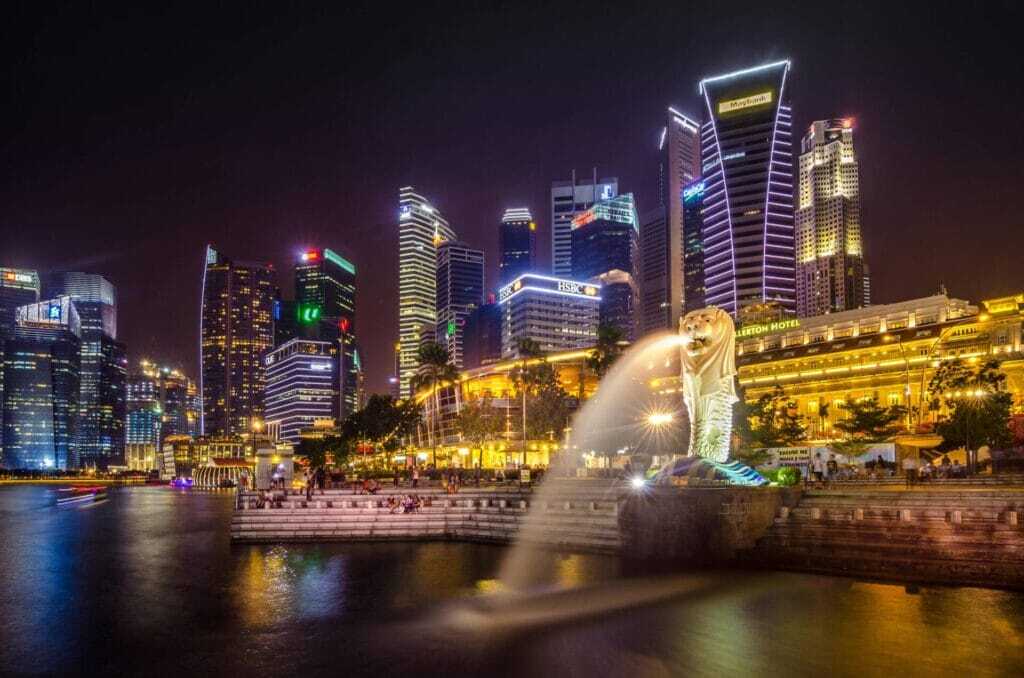
Similarly, Singapore—once known for rigid test-based education—has reinvented itself around the motto “Teach Less, Learn More.” By integrating design thinking, digital literacy, and cultural education, it has built one of the most adaptive education systems in the world, producing students who excel at both problem-solving and innovation.
In the U.S., programs like STEAM (Science, Technology, Engineering, Arts, Mathematics) are slowly breaking down silos, proving that art and imagination are not distractions from science and engineering but essential to their advancement.
Artificial intelligence now raises the stakes even higher. Used wisely, AI can be more than an efficiency tool; it can be a partner in curiosity—helping students test hypotheses, remix ideas, and explore new ways of thinking. Imagine a classroom where AI accelerates human imagination rather than replacing it—where every student is empowered to question, remix, and reimagine knowledge itself.
But education cannot be left to schools alone. Corporations, policymakers, scientists, artists, and communities must share responsibility for building systems that elevate creativity as a societal value.
Business as usual is no longer enough. Capitalism itself must be redefined around creativity and cooperation. Corporations can no longer afford to see themselves merely as profit-making machines. They must become platforms for human imagination—supporting global networks of researchers, educators, and citizens who prioritize long-term flourishing over quarterly returns. Some companies already model this shift. Patagonia, for example, has built its brand not only on outdoor gear but on environmental stewardship and creative activism—donating profits to ecological causes and encouraging customers to repair, not replace, their clothing.
This is capitalism as cultural leadership.
Are we prepared for such a world? That depends on whether we can recognize creativity not as an afterthought, but as the foundation of both education and capitalism. If we do, capitalism can once again become the engine of progress—this time not only for growth, but for human flourishing.