by John M. Eger
December 7, 2025
Creativity is easy to praise and hard to recognize, though chief executives say they want to hire creative people.
Unfortunately, traditional recruiting filters out anyone who doesn’t fit the mold — the artist who taught themselves to code, the former teacher who became a data analyst, the entrepreneur who failed twice before finding a niche. These are precisely the kinds of unconventional thinkers who drive transformation, yet they rarely make it past the first algorithmic screen.
They prize résumés filled with brand-name schools, familiar employers, and linear career paths. The result is a workforce that looks great on paper but too often lacks the imagination and boldness needed to navigate a rapidly changing world.
That may be about to change.

Artificial intelligence — the very technology disrupting nearly every industry — is beginning to reshape how companies identify and recruit talent. Used thoughtfully, AI can help organizations look beyond traditional credentials and uncover qualities that predict creative potential: curiosity, adaptability, and the ability to connect ideas across disciplines.
New AI-driven assessment tools can analyze language patterns, problem-solving styles, and even how candidates respond to ambiguity. Instead of relying solely on keywords or job titles, these systems can detect evidence of open-mindedness, experimentation, and insight — traits that correlate more closely with creativity than GPA or years of experience.
Some companies are already experimenting with this approach. Rather than asking for résumés, they present candidates with real-world challenges and use AI to evaluate how they think through problems. Others are analyzing internal communication data — emails, chat threads, and project notes — to identify teams that demonstrate the kind of creative collaboration that drives innovation.
But there’s a catch: AI can reflect the same biases it promises to fix, and if algorithms are trained on historical hiring data, they may simply reproduce old habits — favoring candidates who look and sound like those already in the system. Creativity, especially from underrepresented groups or unconventional backgrounds, risks being filtered out yet again.
That’s why the human element still matters. The goal shouldn’t be to let machines make hiring decisions, but to use them as lenses that broaden our understanding of talent. When guided by human judgment — and ethical oversight — AI can help recruiters see potential that traditional systems overlook.
In fact, this is where AI could make its most meaningful contribution to the future of work: not by replacing human creativity, but by helping us recognize it. The companies that thrive in the coming decade will be those that hire people who can adapt, invent, and reimagine what’s possible. Machines can analyze data, but only people can dream.
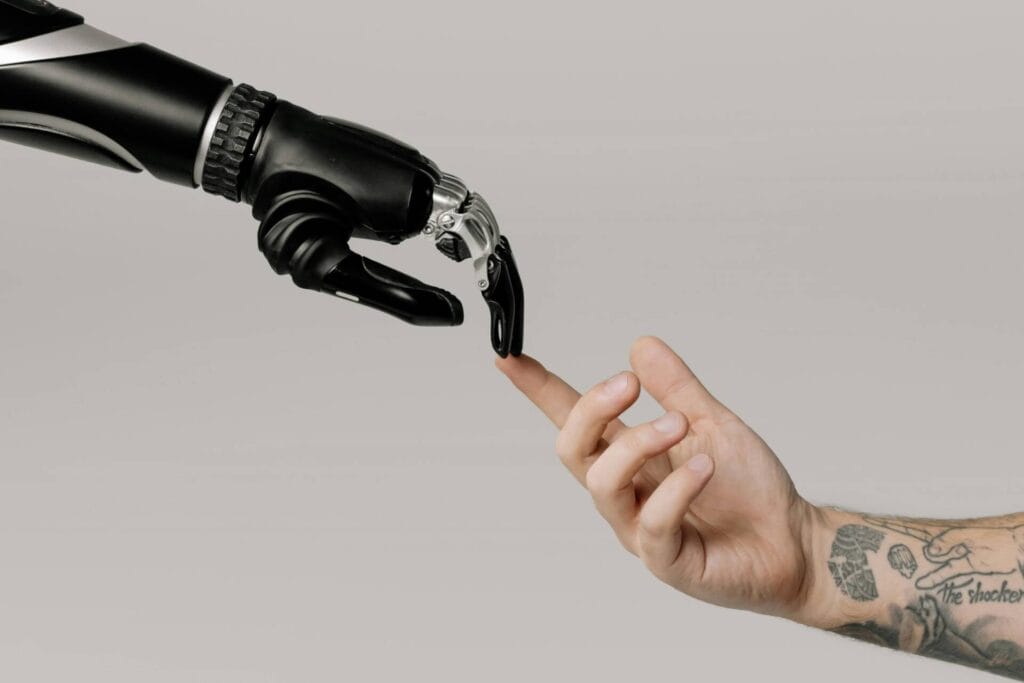
If business leaders are serious about innovation, they’ll need to challenge their own comfort zones — and the systems that reward conformity. AI, for all its risks, offers a rare opportunity to reset the equation. It can help us find the outliers, the boundary-crossers, the restless minds who refuse to color inside the lines.
It is fashionable to claim to use AI in hiring, but the depth and sophistication vary widely—much still depends on how the tool is designed and integrated, and whether human judgment remains central.