By John M. Eger
July 27, 2025
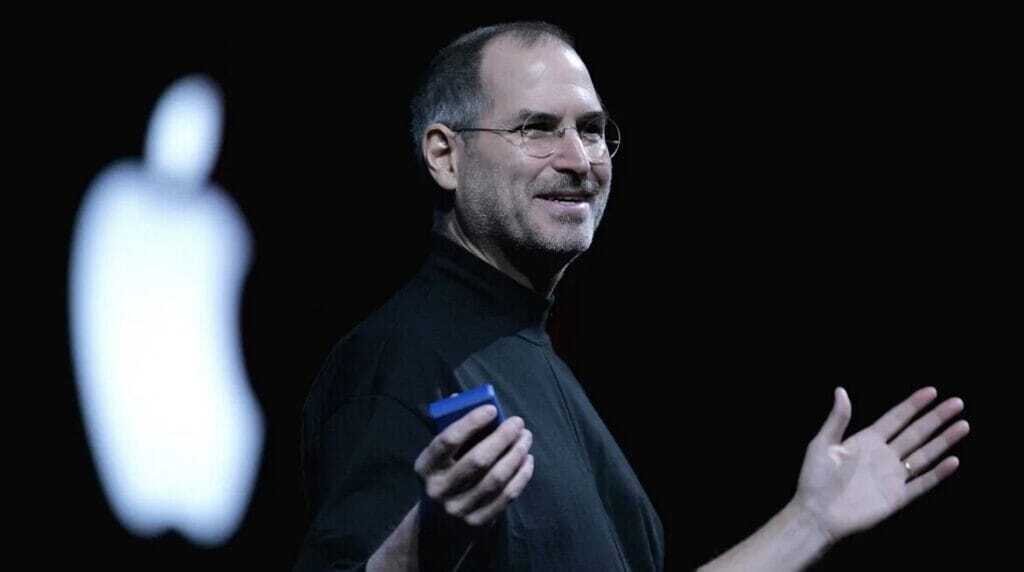
Justin Sullivan | Getty Images
Steve Jobs, the visionary co-founder of Apple, once said:
“Creativity is just connecting things. When you ask creative people how they did something, they feel a little guilty because they didn’t really do it, they just saw something. It seemed obvious to them after a while. That’s because they were able to connect experiences they’ve had and synthesize new things.”
Jobs believed that creativity isn’t magic—it’s about making connections. Seeing patterns. Bringing together unrelated ideas to form something new. In his view, creative people aren’t necessarily inventing out of thin air; rather, they’re noticing what others overlook.
Many people don’t think of themselves as creative. But they’re wrong.
According to Google’s own AI, while it’s difficult to define how many people are truly creative, the reality is that everyone has the capacity for creativity. It’s not an exclusive trait possessed by a chosen few. Creativity can be nurtured, practiced, and developed over time. It’s not a fixed talent—it’s a dynamic skill.
Neuroscience increasingly supports this view. Researchers are discovering that the brain is far more adaptable and inventive than previously believed. Creativity is not limited to artists, musicians, or writers. It lives in engineers, entrepreneurs, teachers, scientists—anyone willing to think differently.
The late Sir Ken Robinson, a celebrated educator, famously argued that all children are born creative. But somewhere around age seven or eight, that innate creativity begins to diminish—often, he suggested, because of how schools prioritize conformity and standardized thinking over curiosity and experimentation.
John Howkins, author of The Creative Economy (2001), emphasized that great ideas can create real wealth. He identified “creative industries” as those including advertising, architecture, design, film, writing, and the arts. But creativity isn’t limited to these traditional areas.
Richard Florida, in The Rise of the Creative Class (2004), expanded this definition to include millions of workers in business, finance, law, medicine, and technology—people who rely on innovation, critical thinking, and advanced problem-solving. He estimated that 30% of the American workforce—some 40 million people—already belonged to this creative class.
In truth, that number is likely even higher today. The rapid expansion of neuroscience, especially in education and the arts, continues to reveal just how much untapped creative potential lies within us all. Technologies like brain imaging and genetic mapping are helping unlock long-held secrets about how we think, learn, and create.
We are entering the era of the new brain—an age that values imagination and innovation as much as logic and data.
In one of Apple’s most iconic advertisements, launched during the 1997 Super Bowl, Jobs and his team issued a bold call to arms. The campaign was titled: “Think Different.” It went like this:
HERE’S TO THE CRAZY ONES.
THE MISFITS. THE REBELS. THE TROUBLEMAKERS.
THE ROUND PEGS IN THE SQUARE HOLES.
THE ONES WHO SEE THINGS DIFFERENTLY.
THEY’RE NOT FOND OF RULES. AND THEY HAVE NO RESPECT FOR THE STATUS QUO.
YOU CAN QUOTE THEM, DISAGREE WITH THEM, GLORIFY OR VILIFY THEM.
ABOUT THE ONLY THING YOU CAN’T DO IS IGNORE THEM.BECAUSE THEY CHANGE THINGS.
THEY PUSH THE HUMAN RACE FORWARD.WHILE SOME MAY SEE THEM AS THE CRAZY ONES, WE SEE GENIUS.
That message still resonates today.
Daniel Pink, in his book A Whole New Mind: Moving from the Information Age to the Conceptual Age, predicts that success in the 21st century will depend less on left-brain analytical skills and more on right-brain creative thinking. He even suggests that the MFA (Master of Fine Arts) is the new MBA—highlighting the growing value of imagination, empathy, and storytelling in the workplace.
In fact, IBM, in a study reported by Fast Company, found that CEOs around the world now rank creativity as the most essential leadership quality—more important than integrity or global awareness.
And yet, we’re too often told to “act our age,” “be realistic,” or “stay focused.” These admonitions can stifle the very qualities that fuel our best ideas: curiosity, boldness, experimentation. But creativity thrives when we feel safe to explore, when we’re surrounded by support, and when we allow ourselves to take risks—even fail.
We may not all be a Picasso or an Einstein—but we all have the ability to be creative. We all have the capacity to contribute to the emerging innovation economy, to solve problems in new ways, and to reimagine the world we live in.
If you are human, you are creative. You only need to give yourself permission to “think different.”
We can all be creative and a productive member of the emerging Creative and Innovative economy. Whether we can all be Picasso or Einstein is another matter. We can all be creative and a productive member of the emerging Creative and Innovative economy. If you are human, you too can be creative.