
But what Is It, and why does it matter for the Future of Work?
by John M. Eger
December 22, 2025

You may have heard the phrase “design thinking,” but what does it mean, and why are tech executives sending their kids to Montessori and Waldorf schools instead of pushing them into coding boot camps?
Put simply, design thinking is a creative way of solving problems. It’s not just about being artistic—it’s about thinking like a designer: asking the right questions, focusing on people’s needs, trying out new ideas, and testing what works.
Schools like Montessori or Waldorf don’t focus on screens or standardized tests? Writer Dan Fost, based in San Francisco, after observing these schools closely, observed that “kids don’t need tech right away—they learn it later. But early on, they need to develop imagination and creativity. Too much screen time can stifle that.”
Tim Brown, the former CEO of design firm IDEO and one of the leaders behind Design Thinking, defines it as “a human-centered approach to innovation that draws from the designer’s toolkit to integrate the needs of people, the possibilities of technology, and the requirements for business success.”
In other words, design thinking helps us tackle complex problems—whether we’re building new products, services, or strategies—by focusing on the human experience. It’s how companies innovate today.
At Stanford University’s renowned “d.school,” students learn design thinking by doing. They work in teams from different disciplines—engineering, art, business, and more—and focus on three core practices:
- Need-finding: Understand the real problem, not just the obvious one.
- Brainstorming: Generate lots of ideas without judgment.
- Prototyping and testing: Quickly build rough models, try them out, learn, and improve.
This hands-on approach helps students build creativity, collaboration, and problem-solving skills. These aren’t just classroom exercises—they’re skills for the real world.
Design thinking is gaining traction across industries because it teaches people to look at problems from different angles, work through uncertainty, and come up with better solutions. It’s not easy, but it’s teachable—and worth the effort. These schools lay the foundation for creative, flexible thinking from a very young age.
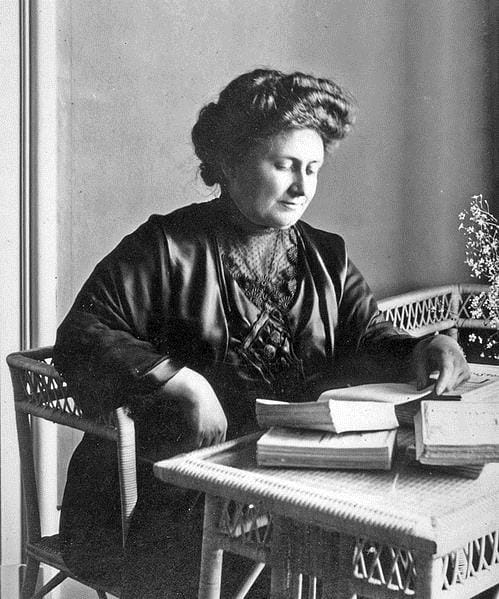
Dr. Maria Montessori, an Italian physician, believed that children learn best when they can explore freely within a thoughtfully prepared environment. Her method, developed over 100 years ago, emphasizes self-directed learning, hands-on materials, and respect for each child’s pace of development. Walk into a Montessori classroom and you’ll see children working alone or in small groups, engaged in meaningful activities—often with unique learning tools designed to spark curiosity. The goal is not just academic success, but cognitive, emotional, social, and physical development.
Montessori education rests on two big ideas:
1. Children build themselves through interaction with their environment.
2. Young children (especially under age six) have a natural drive to develop.
In her words, if children are free to choose and act in a space prepared just for them, they’ll grow into capable, self-motivated learners.
Waldorf education, founded in 1919 by Austrian philosopher Rudolf Steiner, shares similar goals but with its own distinct approach. Waldorf schools focus on educating the whole child—“the head, the heart, and the hands.” That means balancing academics with creativity, imagination, movement, and emotional intelligence. Waldorf schools are famously low-tech. Teachers often use chalkboards, pencils, and storytelling. Computers and screens are avoided in the early years. Why? The focus is on developing strong imaginations and laying a solid foundation for future learning.
As journalist Matt Richtel of The New York Times observed, a typical Waldorf classroom resembles something from the past—featuring wooden desks, books, and chalk, not digital devices. And that’s on purpose.
Of course, technology is part of our world. Kids today grow up with smartphones, video games, and social media—and they’ll need to be fluent in digital tools to succeed in the workplace. Proponents of educational tech argue that it helps reach more students, keeps them engaged, and prepares them for the jobs of tomorrow. But many parents—especially in Silicon Valley—believe that early education should be about the whole child: art, music, nature, creativity, and personal connection. And they’re willing to pay $20,000 to $25,000 a year for it.
What’s more, some argue we could bring the benefits of Montessori and Waldorf to public schools, without the high price tag. That’s a conversation worth having. If design thinking works, if creative learning builds the skills we need for the future, and if these methods have been around for over a century, then the real question is:
Why haven’t we made this the norm?