
by Beth Accomando
August 20, 2025
I know I have a cold, hard heart that finds most modern romance films insufferable. However, there is one filmmaker who consistently explores love with such lush romanticism that it melts even my heart.
That filmmaker is Wong Kar-Wai and his films are so rapturous that they make me swoon.
Since his first feature in 1988, Wong has been sweeping audiences off their feet with his intoxicating style. His films have titles that sound like songs — As Tears Go By, Happy Together, In the Mood for Love, Fallen Angels — and maybe that’s because he views them as cinematic jam sessions.
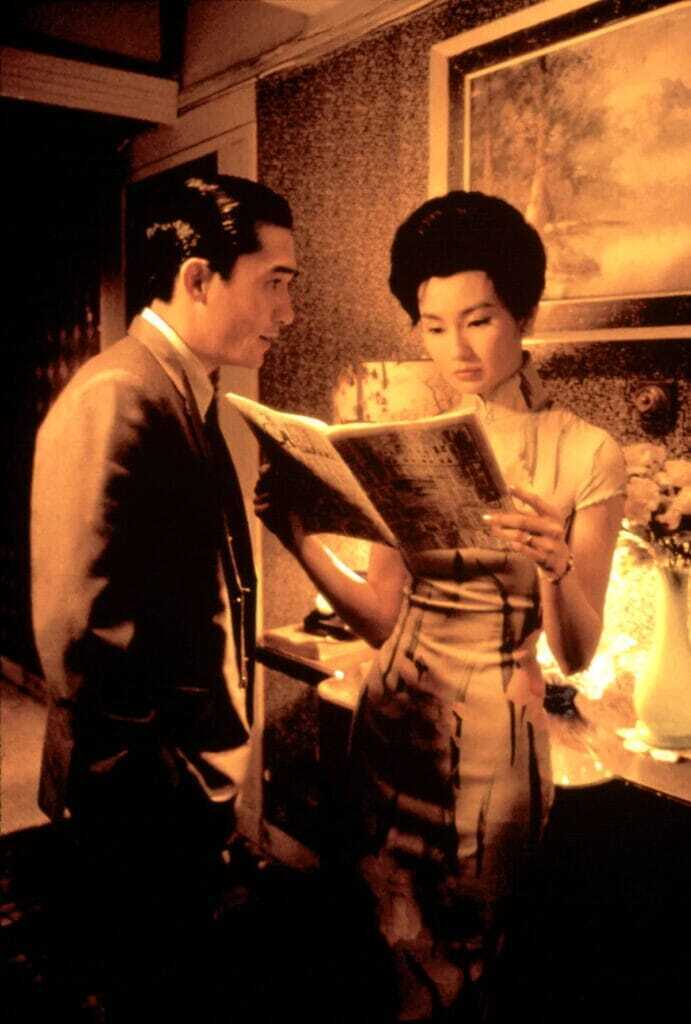
Each film moves to a distinctly different beat, but they all riff on themes of love, loss, desire, and the possibility and impossibility of love. Wong’s trademark improvisational style is typified by handheld camera work, quick cuts, odd angles and a distinctive blurred slow motion that’s become his visual signature.
To Wong, “Each film I make is just like a sequence in that long film. I’m not sure what that long film is intended to be and I just love them all.”
And so do I. Whether it’s the goofy charm of Chungking Express and Fallen Angels or the aching sadness of Happy Together and In The Mood For Love, I simply cannot resist a Wong film.

In the Mood For Love 25th Anniversary
Even his American effort, My Blueberry Nights, which feels like Wong-lite has its wonderful moments. At one point, the owner of a diner (played by Jude Law) explains that every night all the pies are consumed but there is always one lonely blueberry pie left. He points out it’s not the pie’s fault that no one wants it. That seems to summarize the way Wong’s characters sometimes end up. It’s not their fault that no one has chosen them.
I have had the pleasure and honor of interviewing Wong on multiple occasions, including back in 2001 for the U.S. release of In the Mood for Love, which had opened in Hong Kong the previous year. In honor of the film’s 25th anniversary, Digital Gym Cinema is screening the film along with its rarely screened follow up, In the Mood For Love 2001.
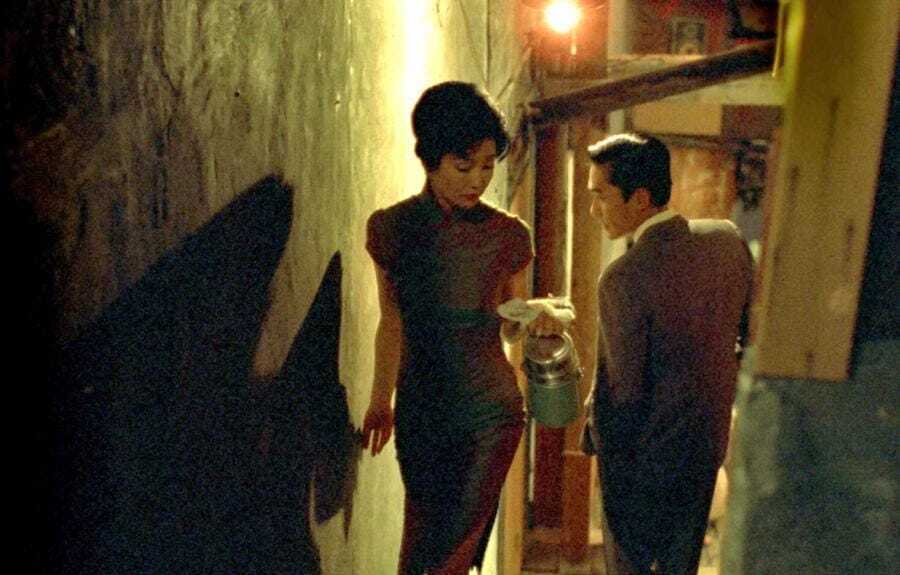
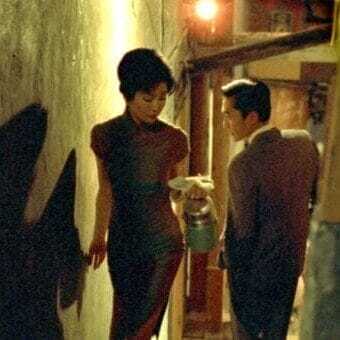
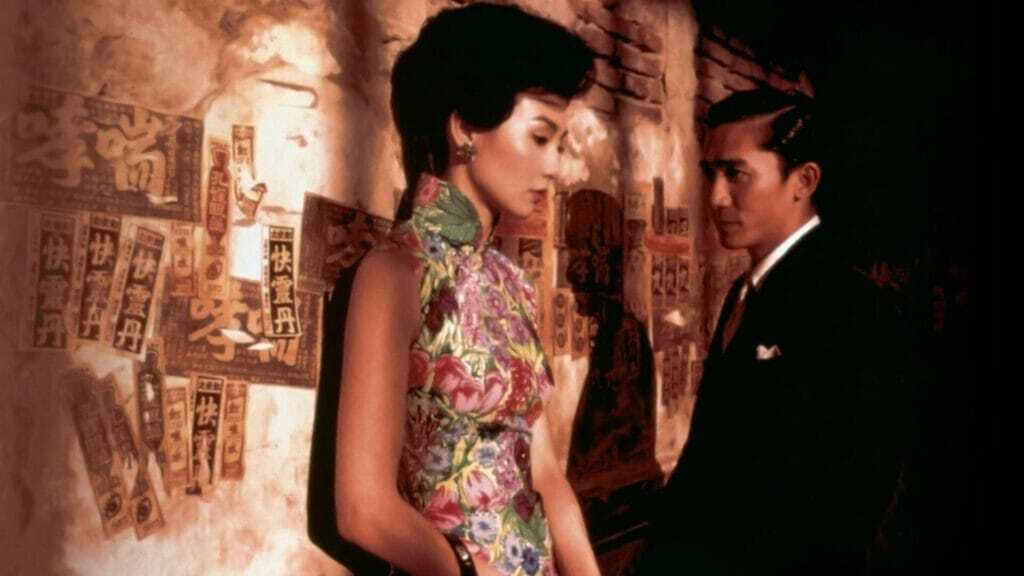
Set in 1962 British Hong Kong, Maggie Cheung and Tony Leung play Shanghainese expatriates Chow Mo-wan, a journalist, and Su Li-zhen, a secretary at a shipping company. Each is married but their respective spouses often work late so the two are often left alone. And since they are in adjacent rooms in a very cramped apartment, they often pass each other in close proximity and develop a polite friendship.
Wong begins each film with just an idea and the confidence that he can improvise the rest.
“We are not making a film in a very normal way,” Wong told me. “It’s normally you have a script and you can send a script to people, and then people will decide they will finance the film or not based on the script. But we have no script. So the only people we can work with is people who have been working with us, and it’s a trust.”
Wang has developed that trust with actress Maggie Cheung, a veteran of such earlier Wong films as Days of Being Wild and Ashes of Time. But for In the Mood for Love he started with less than usual.
“It really grew from zero to now,” Cheung said. “And I’m sure that growth, I am part of it because if he was working with somebody else, I’m sure he would have developed the character in a different way.
Wong builds films around the actors he casts, referring to them as jazz musicians. Always cool, laid back, and sporting shades, Wong relies on his band to improvise along with him. But when I interviewed actor Tony Leung, he noted, Wong’s lead can sometimes be hard to follow.

“I don’t know what happens behind those sunglasses. Maybe he’s sleeping. We’re just dreaming up what to film that day.”
Wong waits till he arrives on the set to script that day’s scenes. So a lot can change during the filmmaking process. When he began In the Mood for Love, he thought he was in the mood for food.
“We want to tell the story of these two persons through eating noodles, pork chops, and rice cookers. And we have the working title of this project called ‘Story About Food.’ But somehow in the process of making this film, we find out it’s actually a story about a period that has been lost in our life in Hong Kong,” Wong said.
Wong set In the Mood for Love in 1962, the year that his family moved to the city from Shanghai. He retains fond memories of a close-knit community of other immigrants from Shanghai and that translates into images that radiate a warm glow and a soundtrack that includes songs he remembers hearing, songs like Nat King Cole’s Quizas Quizas Quizas.
Maggie Cheung said, “Wong found the mood for love when he filmed the first slow motion shots of the characters passing each other in the rain. I think from shooting those scenes, he found the mood for the film. I remember we used to be in the office looking at the dailies, and he would put on the music that he’s chosen for the film now. And we’ll be looking at those images, and those were the first exciting images that we saw. It’s like, This is it, this is it.”
The characters first meet when the movers mix up their belongings. Later, the two strangers discover that their spouses are having an affair, and that propels the rest of the action but Chow and Su, despite their passion for each other, refuse to commit the same kind of adultery as their spouses.
Leung acknowledged that he had no idea how the story would wind up because Wong often creates his films in the editing room.
“The most interesting thing is even if you know very well about your character, after you finish all the shooting, you will I never have an idea of what the story is about because he would do that in the editing room because he would shoot a lot, and I think the footage is enough for maybe three or four movies,” Leung explained.
After seeing the finished film, Cheung was surprised by the lack of dialog.
“I didn’t know the film would have so many unsaid words that he is not really trying to explain what’s going on with these two people, but he’s just constantly suggesting to the audience what’s going on between them,” Cheung told me in 2001. “It leaves a lot of space for the audience to imagine the rest. And I didn’t know the result of the angle that he was shooting the film. You feel you’re an outsider when you’re an audience, that you’re peeping into the story of these two people.”
Wong said he favors scenes without dialog because they allow him greater flexibility in the editing room, and can also allow for him to add voiceover narration well after shooting is done, again allowing the film to take on a whole new shape and tone.
Critics have not unanimously embraced Wong’s films. Some dismiss them as triumphs of style over substance. But others, myself included, insist the style is the substance. Wong’s style captures and conveys the breathless passions, the aching longing, and the intangible way love can make us feel. But his style often arises from necessity. The cramped quarters where he shot in the mood for love dictated the film’s look.
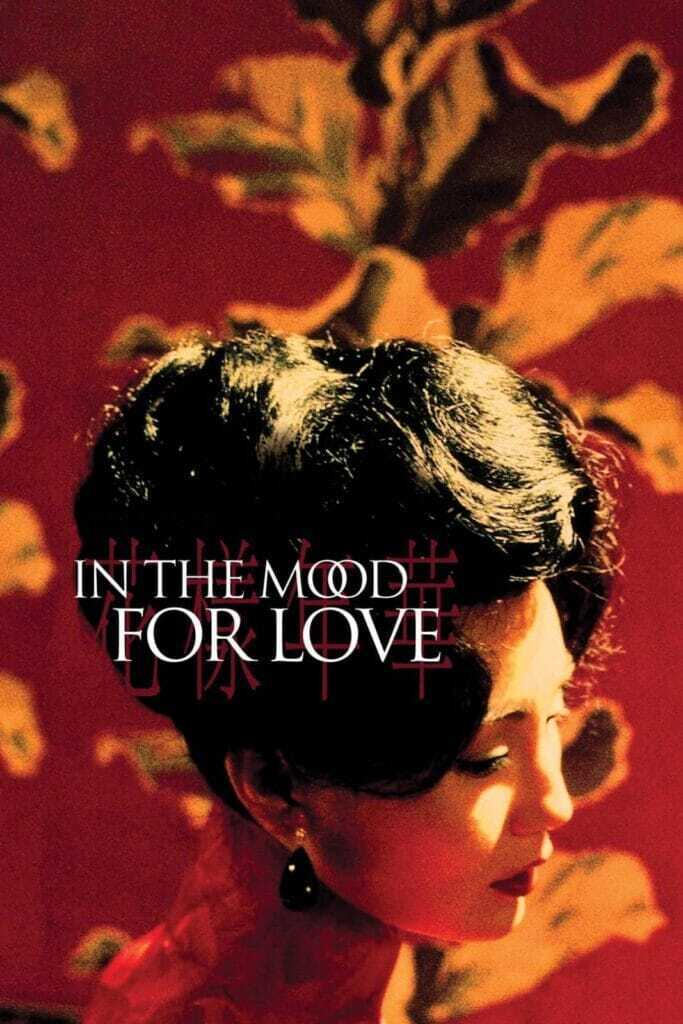
“So sometimes we have to turn our camera to the mirror, something like that, and people will think, Well, it is very stylized. Yes, It is, but at the same time, it is because we are shooting in a very small space,” Wong explained.
That’s why Wong relies on people that has built a long term creative relationship with so that they can almost read each other’s minds, like musicians in a band. So his crew can improvise as much as the director, which allows Wong allowed him to develop a shorthand to get what he wants.
“If I wanted the look of a woman, then we said, ‘Okay, you remember five years ago, we were in that coffee shop, there’s a strange lady eating by herself. You remember that woman?’ And I said, ‘Yes, I want a woman like this.’ And he [cinematographer Christopher Doyle] just got it. I think this relationship actually is a necessity for the way we work because we need understanding between us. And I’m the band leader. I just keep everything in tune,” Wong said.
Revisiting In the Mood for Love 25 years later makes for an even richer experience. We can see how it plays into that one long film he said he was making and can feel its particular rhythms and how it adds a few new riffs. But the themes are constant: love, loss, and the way memory can shape our lives. If you have never experienced In the Mood for Love, then please check it out in the gorgeous and intimate Digital Gym Cinema where the picture quality is crisp and the sound is exquisite and you can just immerse yourself in Wong’s delirious style. And if you have already seen it, then I don’t think you need any urging to go see it again.
Program:
In the Mood For Love (2000) (98 mins)
In the Mood For Love 2001 (2001) (9 mins)
Showtimes:
Friday, August 22, 2025: 2:00, 7:00
Saturday, August 23, 2025: 8:00
Sunday, August 24, 2025: No showtimes
Monday, August 25, 2025: 4:30
Tuesday, August 26, 2025: No showtimes
Wednesday, August 27, 2025: 7:00
Thursday, August 28, 2025: No showtimes
Ticket Prices: $13 Regular / $11 Students & Seniors / $9 Members


Reminder: FilmOut, San Diego’s LGBTQ+ film festival runs Thursday through Sunday, with opening night at The NAT and the remainder of the festival at the Museum of Photographic Arts, both in Balboa Park. Great features, shorts and documentaries fueled by a queer sensibility.
Also at Digital Gym Cinema: CatVideoFest is back and multiple screenings have already sold out. Oscilloscope Laboratories presents CatVideoFest 2025, a compilation of the latest and best cat videos culled from countless hours of unique submissions and sourced animations, music videos, and classic internet powerhouses. Each year, local theaters partner with nearby cat-focused charities, animal welfare associations and shelters alike to donate a portion of ticket proceeds to local cats in need. At Digital Gym, ten percent of ticket sales support Los Gatos de Barrio Logan.
Saturday, Aug. 23, 2025: 2:00 (SOLD OUT), 4:00 (1 TICKET LEFT)
Saturday, Aug. 30, 2025: 2:00 (SOLD OUT), 4:00 (JUST ADDED)
Ticket Prices: $13 Regular / $11 Students & Seniors / $9 Members
–
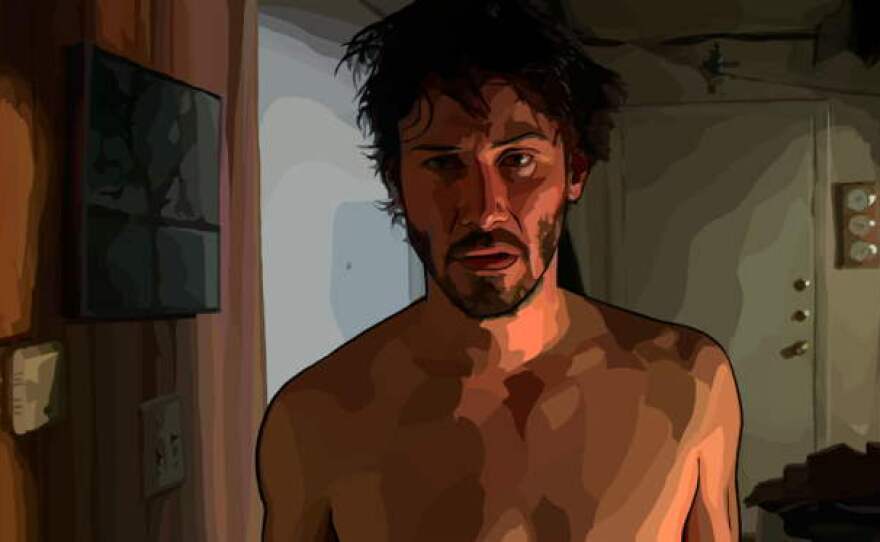
DGC Video continues its Deep Cuts / Keanu Reeves August film series with A Scanner Darkly on Tuesday, Aug 26 at 7pm. Deep Cuts is a new series at Digital Gym Cinema celebrating lesser known films and performances from the careers of major cinema icons. A Scanner Darkly is Richard Linklater’s adaptation of Phillip K. Dick’s novel and done in a rotoscope animation style.
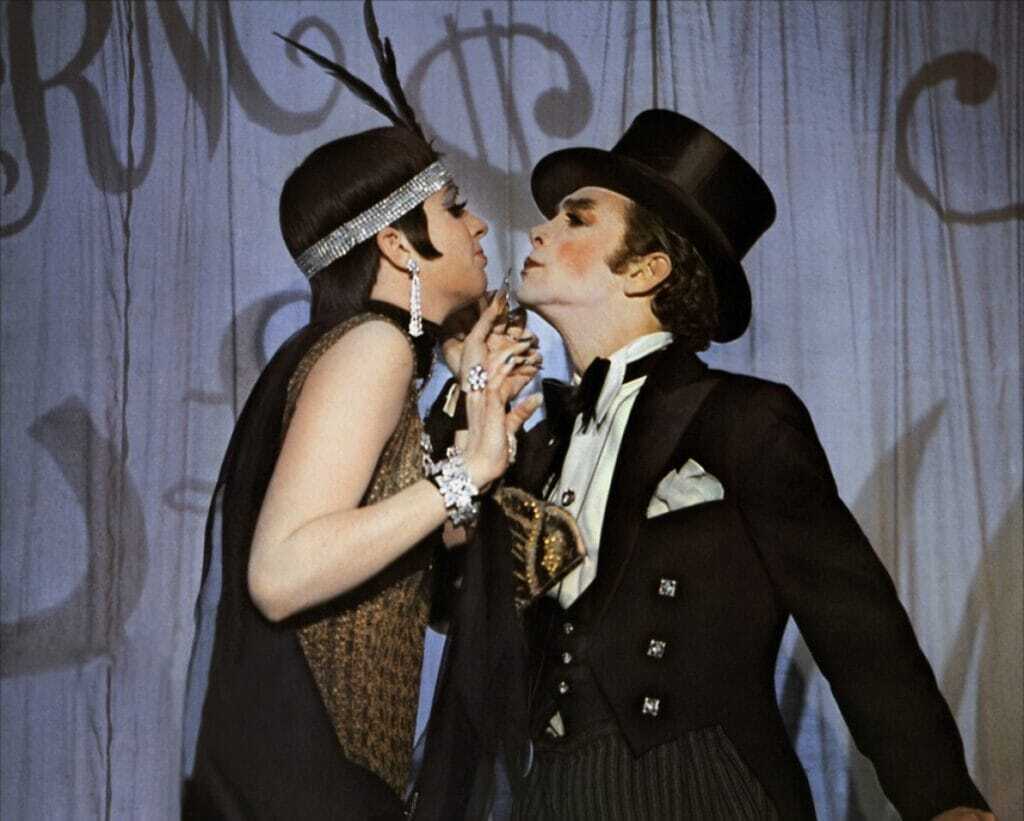
Angelika Film Center at Carmel Mountain also does some fun retro and event screenings including: The 40 Year Old Virgin 20th Anniversary on Friday, Saturday and Sunday; KPop Demon Hunters: A Sing-Along Event on Saturday and Sunday; and its Musical Mondays on August 25 will highlight Bob Fosse’s brilliant Cabaret featuring Liza Minnelli and Joel Grey.
Trash-Mex continues its Santo Sundays series at The Frida Cinema in Orange County this Sunday with El Santo in The Vengeance of the Crying Woman. If you have never seen an El Santo film, I can’t urge you enough to go experience it in a movie theater with a cheering crowd. And Armando Hernandez of Trash Mex is usually on hand for a great intro.