By Beth Accomando
December 3, 2025

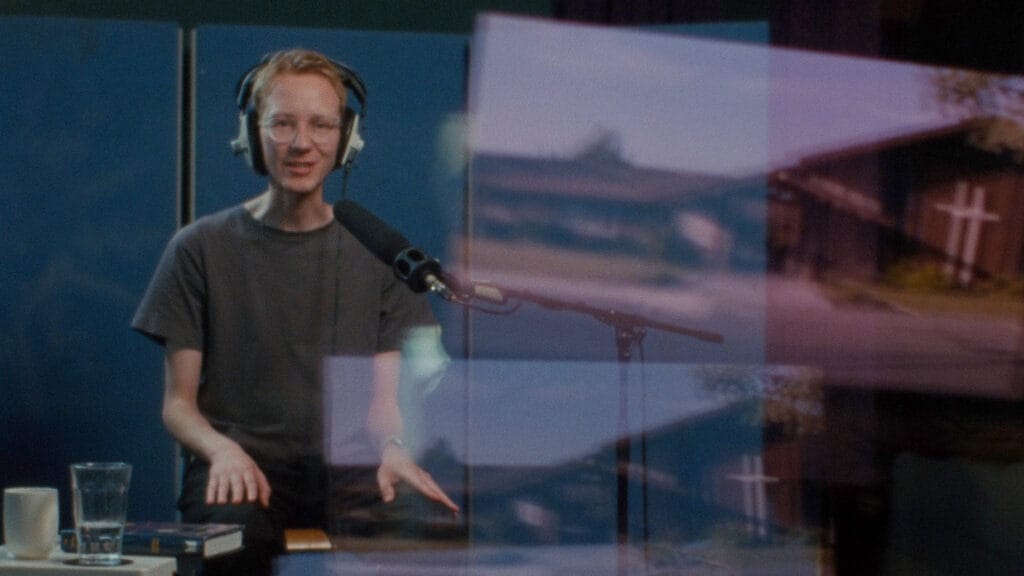
Zodiac Killer Project is an oddly interesting documentary that is not just about the infamous serial killer but also about a failed film project, the creative process, and our obsession with true crime especially when the body count is high.
Filmmaker Charlie Shackleton thought he was going to make the next great American true crime documentary focusing on a highway patrolman who crossed paths with a man he believed to be the Zodiac Killer and how he then spent decades trying to catch him. It was to be based on Lyndon E. Lafferty’s book The Zodiac Killer Cover-Up: The Silenced Badge. The documentary, however, fell apart, leaving Shackleton with an unfinished film. But from the ashes Shackleton decided to craft a film about how he would have made the documentary and how it might have fit into the plethora of true crime films and series we currently have to choose from.
If you are familiar with the Zodiac Killer then you know that his identity is still officially unknown despite decades of investigation and lots of theories out in the ether. So most people will suspect going into the film that the killer’s identity will not be revealed with a flourish at the end.
Since the case has been examined and re-examined and written about for decades, what can a film now even offer? The answer is that it is more about Shackleton and the filmmaking process than the Zodiac Killer, and it is more an exploration of the media’s fascination with violent crime than a rehashing of facts about the Zodiac Killer.
From a filmmaking point of view, it is fascinating to hear a director tell us the film he would have made, the tropes he might have tapped into, and the way he would have built tension. Shackleton essentially gets to tell us not just how he would have made the film but how what he did should have impacted us, how we should have felt, and what we should have thought. It’s like a commentary track in which the director gets to explain everything so we can appreciate his clever touches and subtle gestures. That’s a luxury most director’s never get, and at times Shackleton allows himself to be quite self-indulgent.
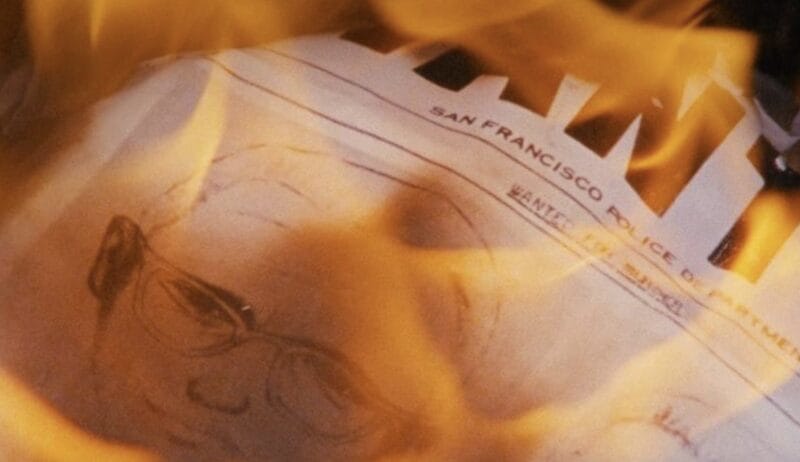
The film really is all audio and could have easily been an audio podcast. The images are mostly just static shots of things not actually connected to the real crimes or investigation. We are shown a church but not the actual one the officer staked out or a road but not exactly the one that was traveled. Shackleton also talks about creating a montage or a graphic like the ones we see in numerous other shows or documentaries, so he simply cuts to clips of those works to support how cliched true crime stories have become.
Shackleton gets to describe what he would have done while simultaneously critiquing it. Sometimes he seems very proud of how he would have shot or edited a sequence, speculating on how carefully he would have created tension or guided our emotions. And sometimes he sounds like he would have been resigned to take the lazy way out and just do what had been done before.
On a certain level the filmmaking on display here is not impressive. It is never visually compelling or stylish. Plus it is weird to have Shackleton make himself the center of the story with someone interviewing him (it takes almost half the film before we even see Shackleton sitting awkwardly in a recording booth) so that he is not merely reading a written commentary track.
But there is something compelling about Shackleton’s analysis of the formula of the true crime film. His critique is not just about the filmmaking process but also about how we as an audience consume these non-fiction works and allow ourselves to be sucked into often sensational and manipulative techniques.
Zodiac Killer Project opens Friday for a week run at Digital Gym Cinema. I think it is better suited to people who want a behind the scenes look at a filmmaker’s documentary process than for aficionados of true crime.

Coming up at Digital Gym Cinema:
Dec. 5: Jafar Panahi’s latest, It Was Just an Accident
Dec. 5: German Currents Kino: Köln 75
Dec. 11: Goodbye, Dragon Inn, presented as part of CINEMATHEK, a year-round screening series presented by Pacific Arts Movement (Pac Arts) and Digital Gym Cinema (DGC) that offers year-round access to curated screenings of classic, cult, and newly restored Asian and Asian American films.
Dec 12: A full week of Todd Haynes’ Safe (first time on DCP)